Nowhere else in Serbia are so many monasteries packed into so small an area. Between the late 15th and the 18th century some thirty-five were founded in the valleys of Fruška Gora; sixteen survive as active communities today. Together they kept Serbian religious life, literacy and art alive during the centuries of Ottoman rule further south — which is why the mountain is called the Serbian Holy Mountain or the “Serbian Mount Athos”.
Why here?
After the fall of the medieval Serbian state in 1459, the last despots of the Branković family lived as Hungarian vassals in Srem, north of the Sava. Fruška Gora offered what monks needed: seclusion, water, timber, vineyards and a Christian overlord. Refugee monks brought with them the relics of saints and rulers — Prince Lazar, Emperor Uroš, Stefan Štiljanović — and the monasteries became shrines of national memory as much as houses of prayer.
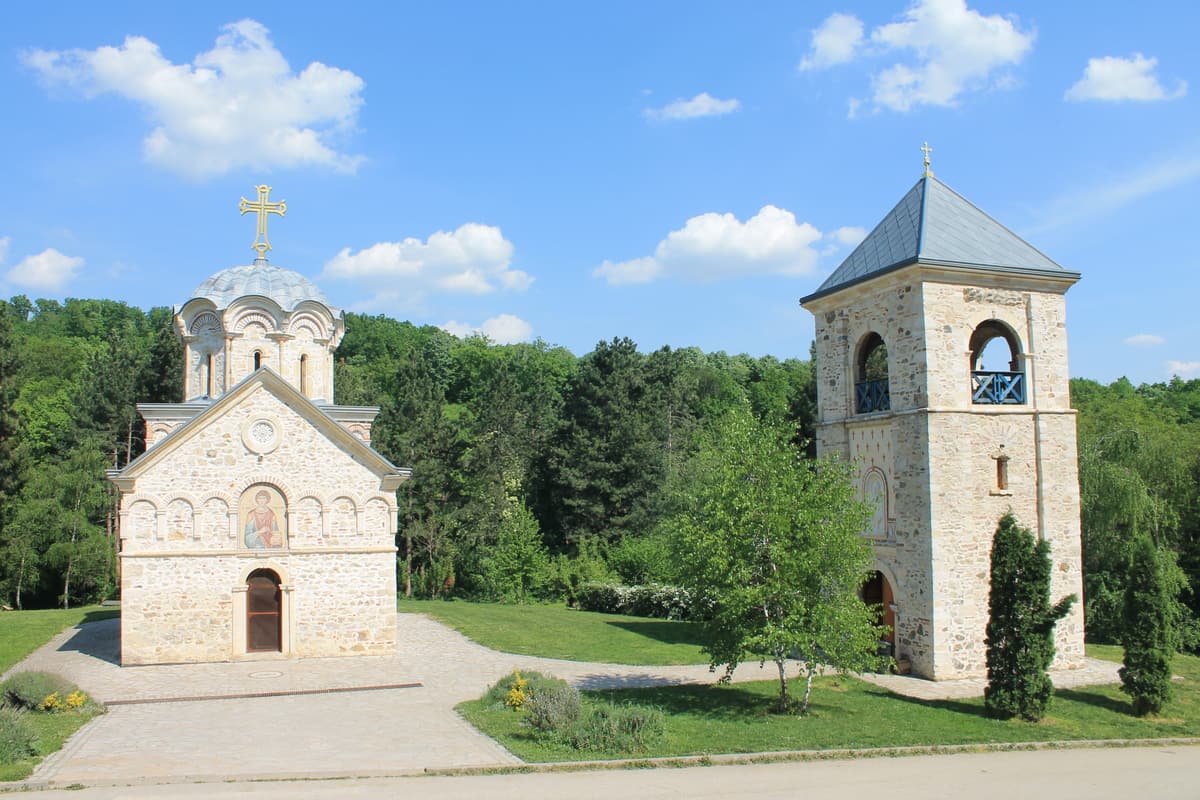
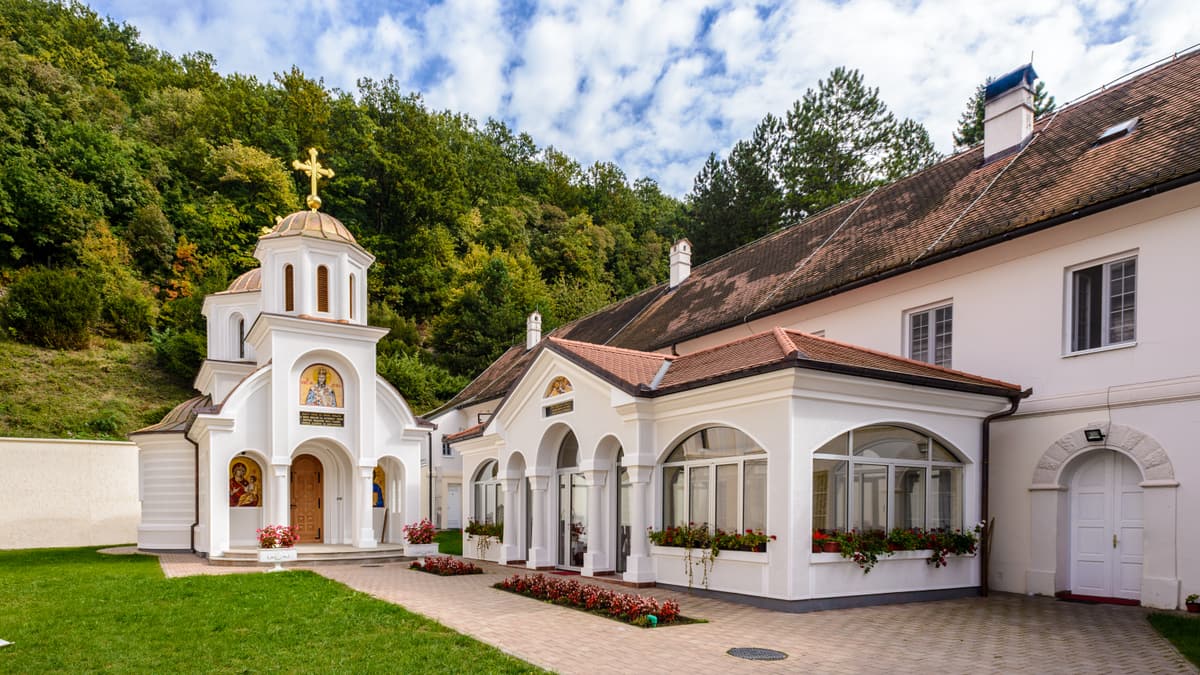
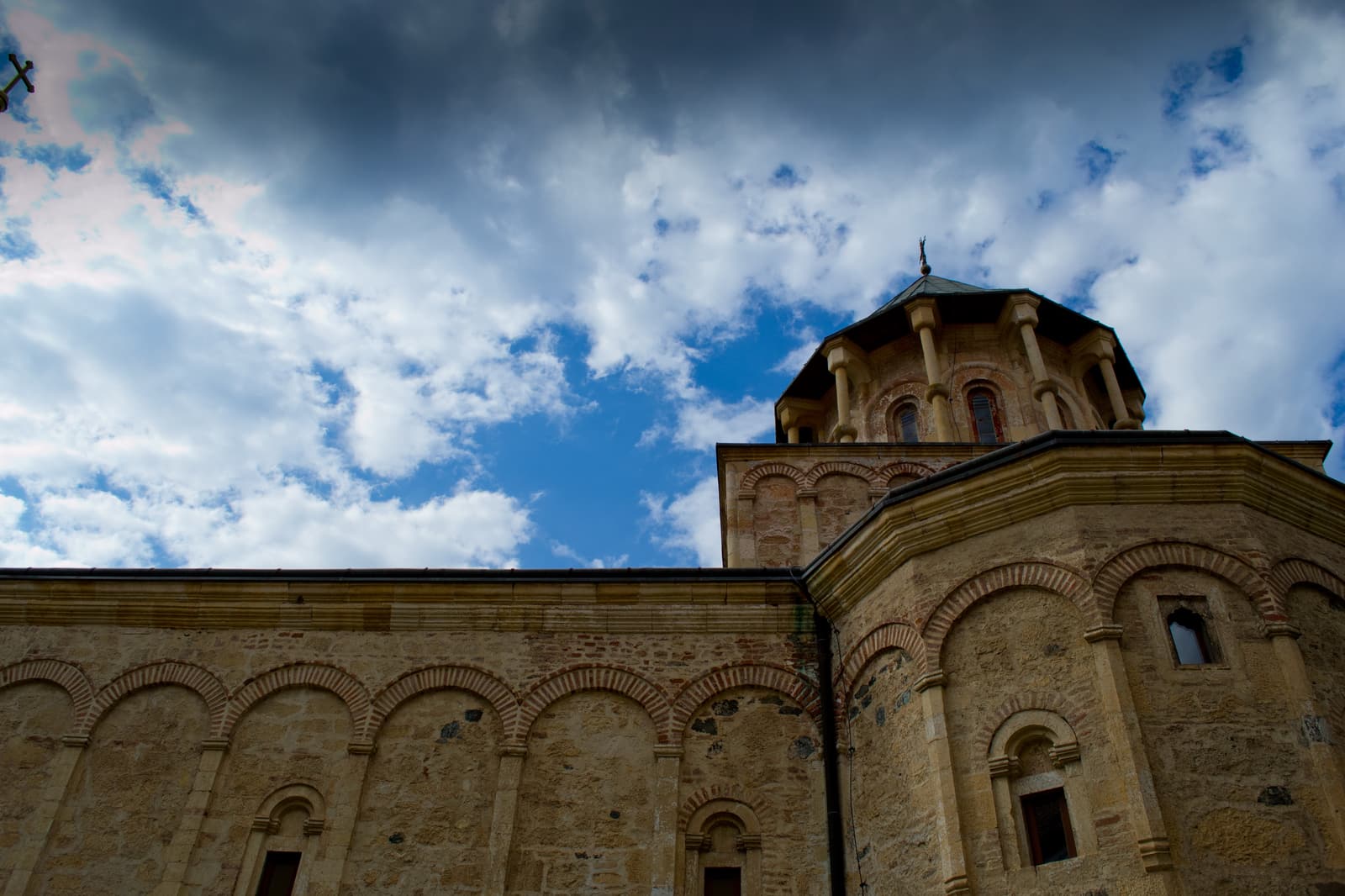
Most churches began in the Morava and Raška traditions of medieval Serbia. In the 18th century, under Habsburg rule, they gained tall baroque bell towers, arcaded residences and gilded iconostases painted by masters such as Teodor Kračun, Dimitrije Bačević and, later, Uroš Predić. That blend of Byzantine plan and Central European dress is the signature of Fruška Gora.
The Second World War was a catastrophe: monasteries were plundered, relics removed, towers dynamited. Restoration began in the 1950s and accelerated after 1990; Bešenovo, razed to the ground, has been entirely rebuilt in recent years.
All sixteen at a glance
Listed roughly from east to west. Foundation dates rest partly on tradition; the dedication is the church’s patron feast.
| Monastery | Dedicated to | Founded / first recorded | Known for |
|---|---|---|---|
| Krušedol | Annunciation | 1509–1516 | Branković mausoleum; royal and patriarchal tombs |
| Velika Remeta | St Demetrius | Recorded 1562 | Brick church; tallest bell tower (≈ 39 m) |
| Grgeteg | St Nicholas | Tradition: 1471 | Iconostasis by Uroš Predić; gardens |
| Staro Hopovo | St Panteleimon | Recorded 1546 | Tiny forest church of 1752 |
| Novo Hopovo | St Nicholas | Recorded 1541; church 1576 | Finest architecture; frescoes of 1608 |
| Vrdnik-Ravanica | Ascension | Recorded 1566 | Held Prince Lazar’s relics 1697–1942 |
| Jazak | Holy Trinity | 1736–1758 | Baroque ensemble; relics of Emperor Uroš |
| Mala Remeta | Protection of the Mother of God | Recorded 16th c.; church 1759 | Small convent in a narrow valley |
| Bešenovo | Holy Archangels | Tradition: late 13th c. | Destroyed in WWII; newly rebuilt |
| Beočin | Ascension | Recorded 1566 | Park-like gardens on the north slope |
| Rakovac | Sts Cosmas and Damian | Tradition: 1498 | Scriptorium; near the Danube |
| Šišatovac | Nativity of the Mother of God | 1520 | Lukijan Mušicki and Vuk Karadžić |
| Petkovica | St Petka | Recorded 1566 | Frescoes of 1588; forest setting |
| Kuveždin | St Sava and St Simeon | Recorded 1566 | Rebuilt after wartime destruction |
| Divša (Đipša) | St Nicholas | Tradition: late 15th c. | Remote, peaceful, western hills |
| Privina Glava | Holy Archangels | Tradition: 12th c. | Westernmost; among vineyards near Šid |
Which monasteries should you visit?
If you have two hours
Go to Krušedol for history and frescoes, or Novo Hopovo for architecture and easy access from the main road.
If you have half a day: the eastern circuit
Krušedol → Grgeteg → Velika Remeta, with Novo Hopovo on the way back over Iriški Venac. About 40 km of driving from Irig and three unhurried hours of visits. This is the route of the half-day monastery tours.
If you have a full day: add the south
Continue from Novo Hopovo to Vrdnik-Ravanica and Jazak, with lunch in Vrdnik or Irig. Seven monasteries is a full, rewarding day — more than that and impressions blur.
If you have two days: the far west and the Danube side
Day two can follow the foothill road to Mala Remeta, Bešenovo, Šišatovac, Petkovica and Kuveždin, or cross to the north slope for Beočin and Rakovac above the Danube, combined with the wineries of Banoštor.
How to visit
- Opening: generally every day from early morning until dusk. There are no tickets and no entrance fees.
- Dress: shoulders and knees covered for everyone; avoid beachwear and very tight clothing. A scarf is appreciated for women but rarely insisted upon.
- Behaviour: phones silent; no photographs inside churches unless you are told otherwise; do not walk between worshippers and the iconostasis during a service.
- Services: morning liturgy and evening vespers are open to all. Stand at the back; you need not participate.
- Giving back: light a candle, leave a donation or buy honey, rakija, wine, herbal balms or icons at the monastery shop.
- Getting between them: by car, taxi, bike or guided tour. Marked footpaths link several neighbours — Novo and Staro Hopovo; Grgeteg and Velika Remeta; Šišatovac, Petkovica and Kuveždin.
Feast days
Each monastery celebrates its slava, the feast of its patron, with a festive liturgy and a crowd of pilgrims. The Serbian Church follows the Julian calendar, so fixed feasts fall thirteen days later than in the West — Christmas on 7 January, St Nicholas on 19 December. Easter is the high point of the year. On such days the experience is unforgettable, but arrive early and expect full car parks.